Two original Unity titles built for in-vehicle displays, where the controller is the vehicle: turn the steering wheel to steer, press the accelerator to go, press the brake to slow down. Designed for parked-only play on centre console and rear occupant screens, as a real answer to the question of what a cockpit display does when the car is charging, waiting, or parked.
A car already contains the best game controller most people own: a large analog wheel with real return force, and two progressive analog pedals. Reusing them turns a screen the passenger was ignoring into something worth sitting in the car for.
Steering angle and pedal travel arrive as continuous values, not as button presses. That gives fine throttle control, progressive braking, and precise cornering that a thumbstick cannot match.
Gameplay is gated on vehicle state. The titles are built for a stationary vehicle, and driving controls are only borrowed for play when the car is not being driven. On rear occupant displays, play can continue independently of the front seat.
The same builds run on touch, gamepad, and keyboard, so the titles can be demonstrated on a bench, a tablet, or a show stand without a vehicle present. Useful for auto show demos and for development.
An arcade racer where the wheel in your hands is the wheel on screen. Five environments, a career season, splitscreen multiplayer, and a garage where cars are tuned, painted, and upgraded between races.
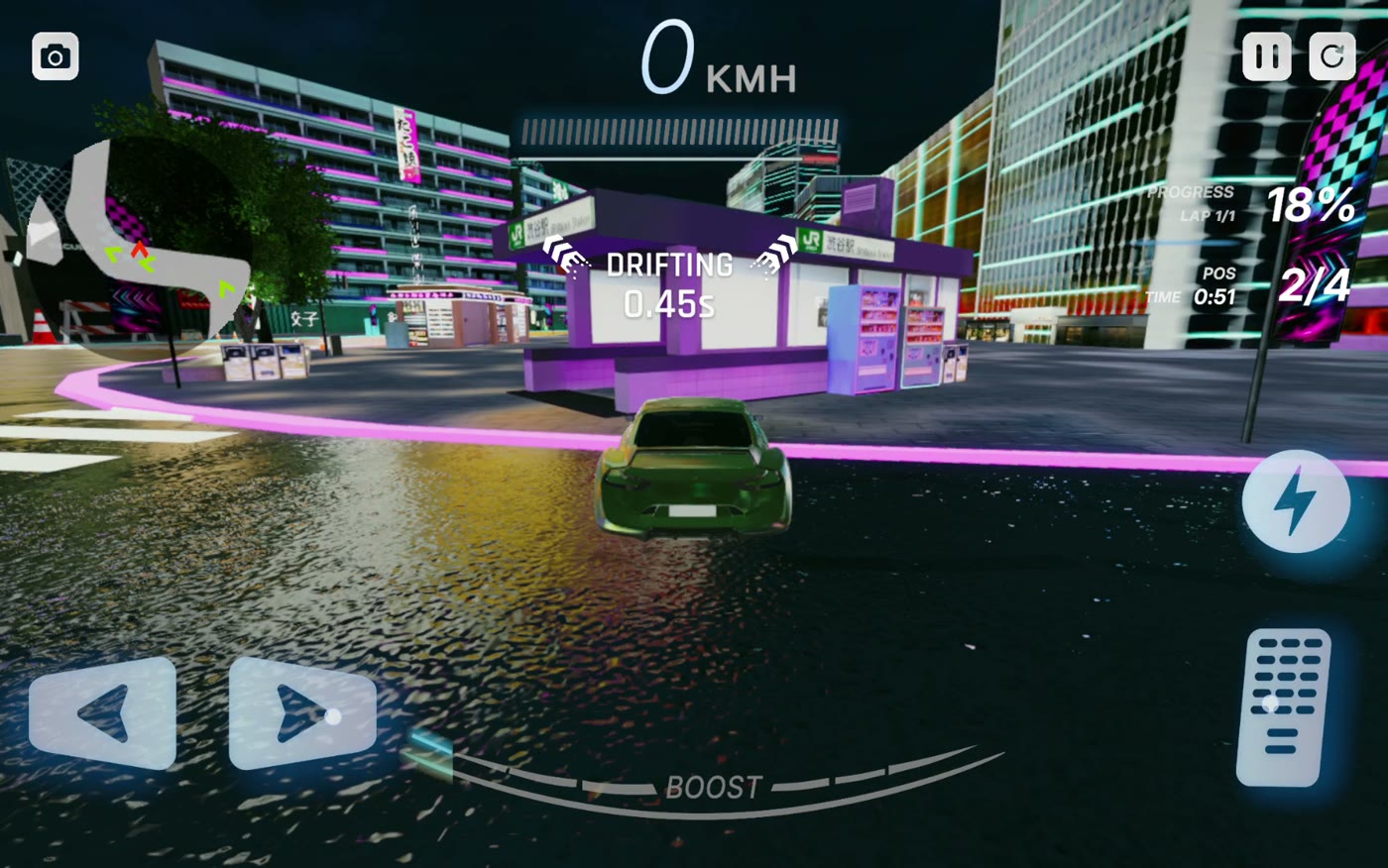
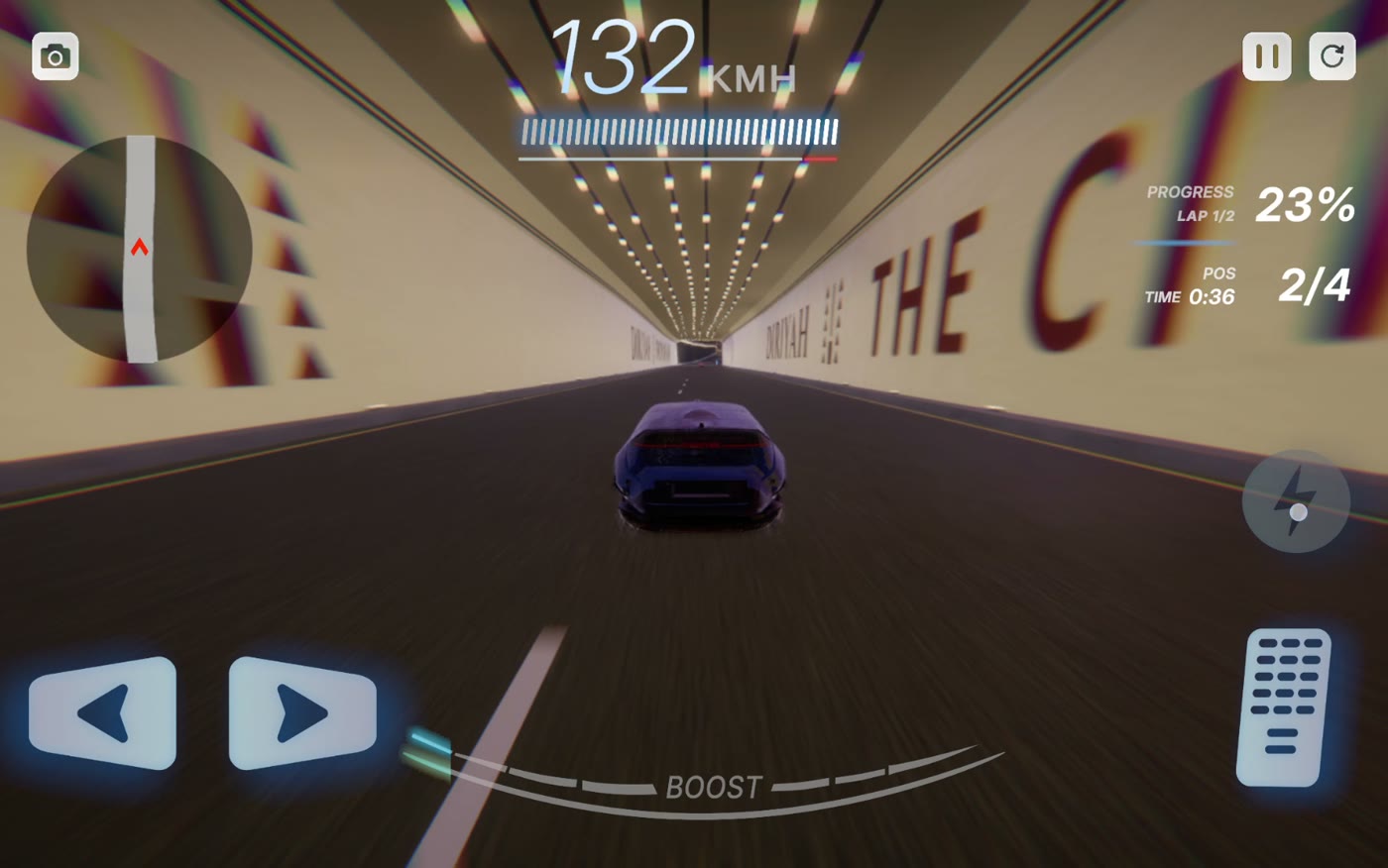
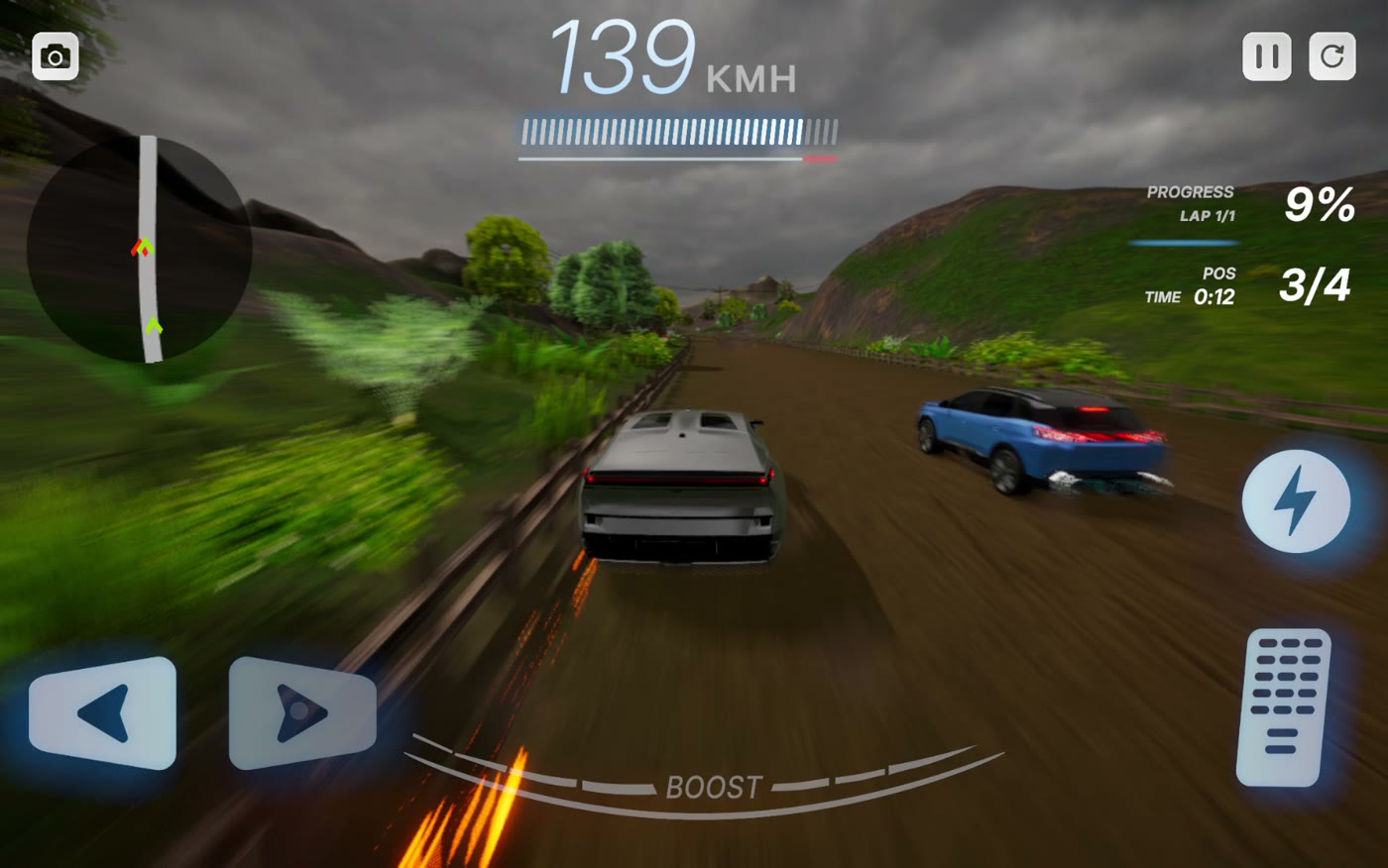
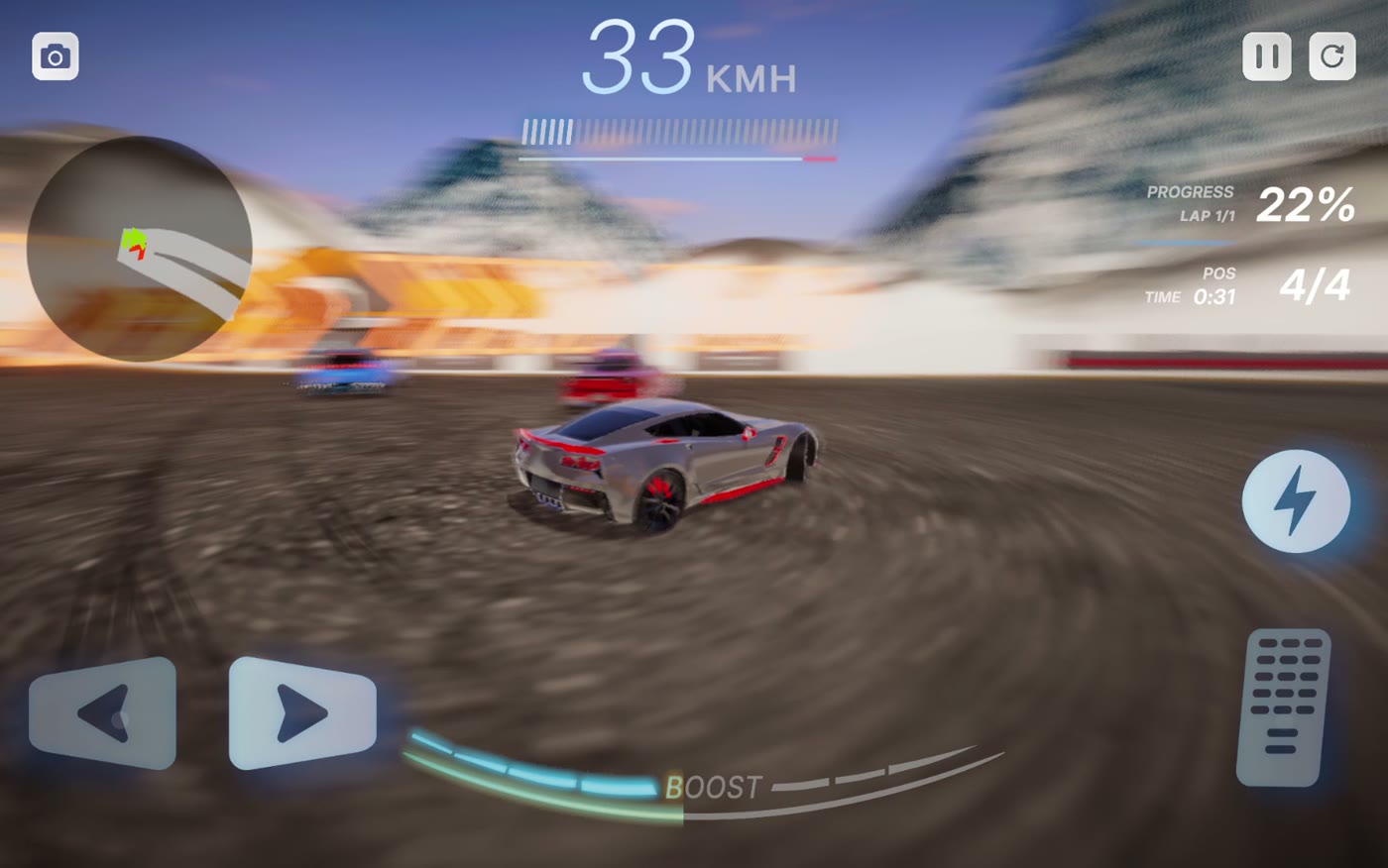
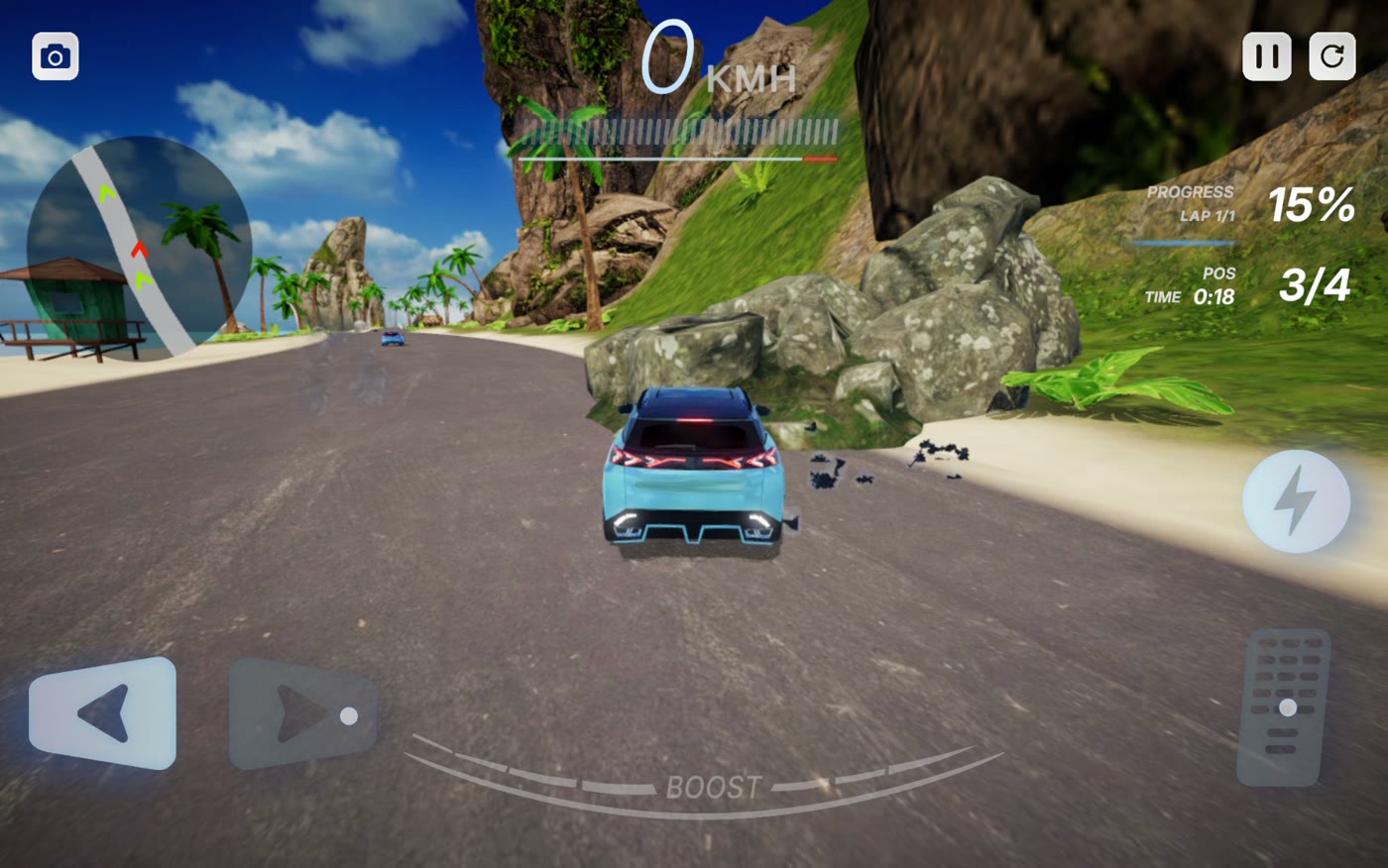
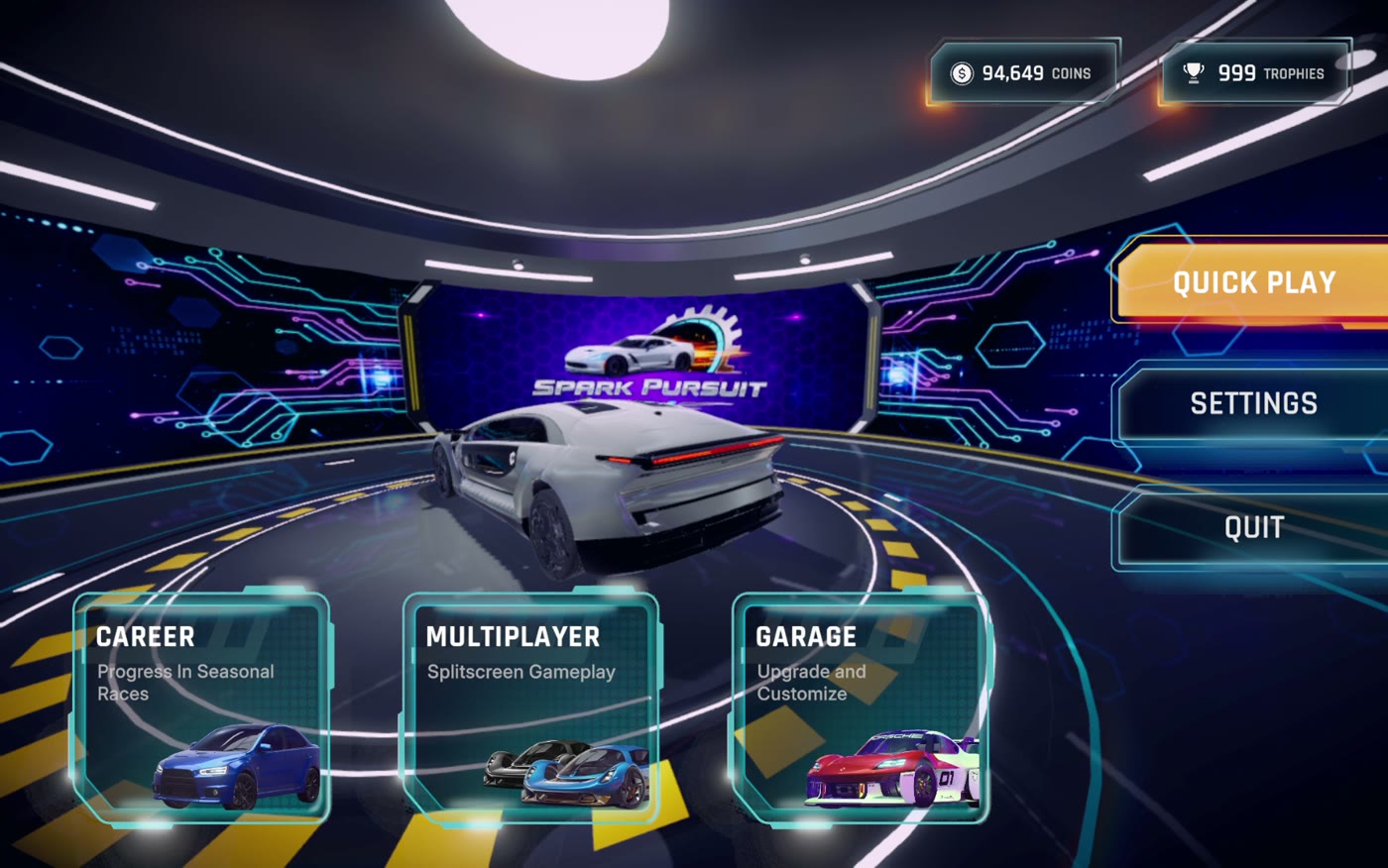
Hover or tap a tile to play a short silent preview. Captured from a development build.
A downhill skiing title with the same control idea applied differently: lean into the wheel to carve, use the pedals to tuck for speed or check into a turn. Gates, air time, and trick points reward a clean line rather than raw throttle.
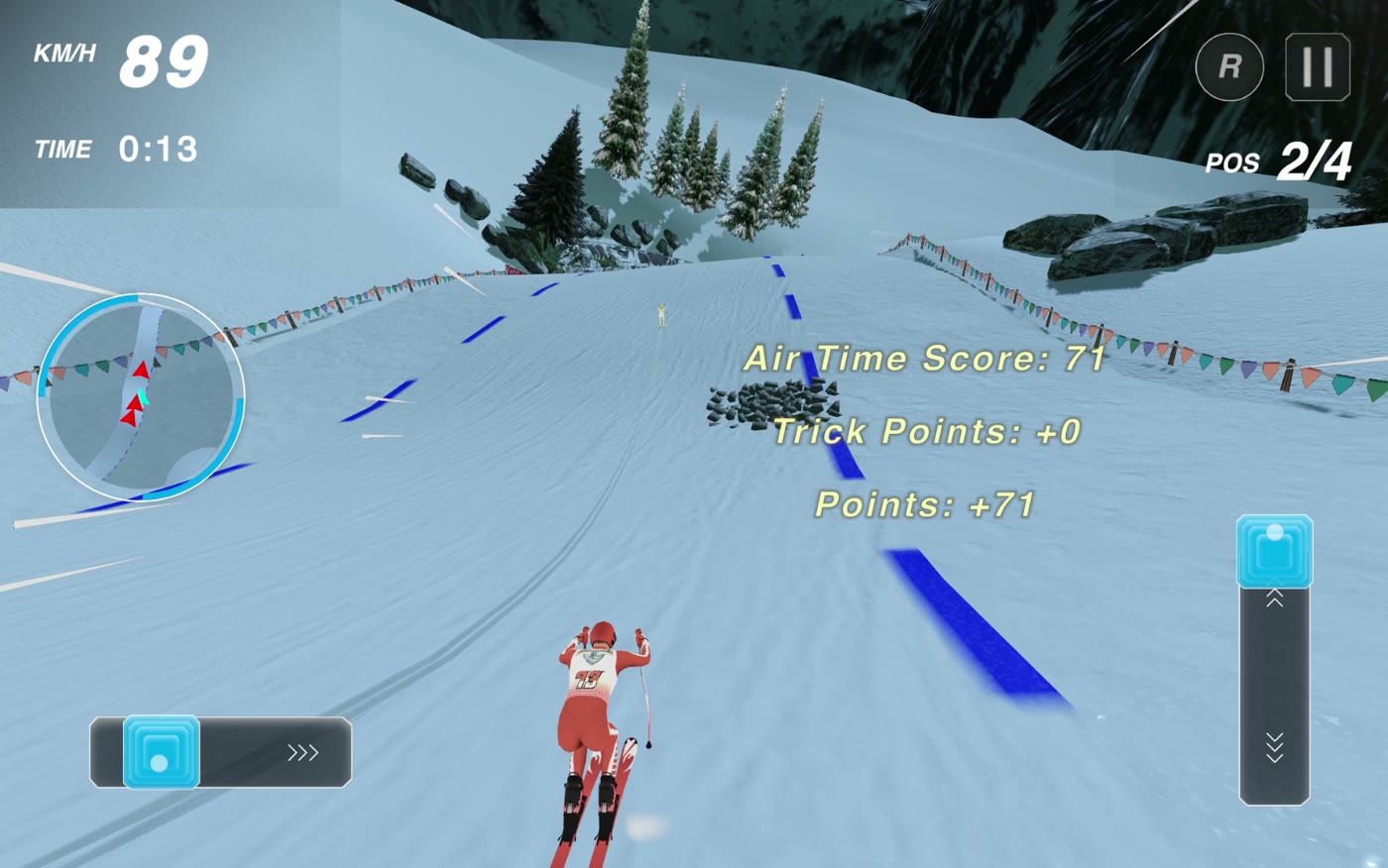
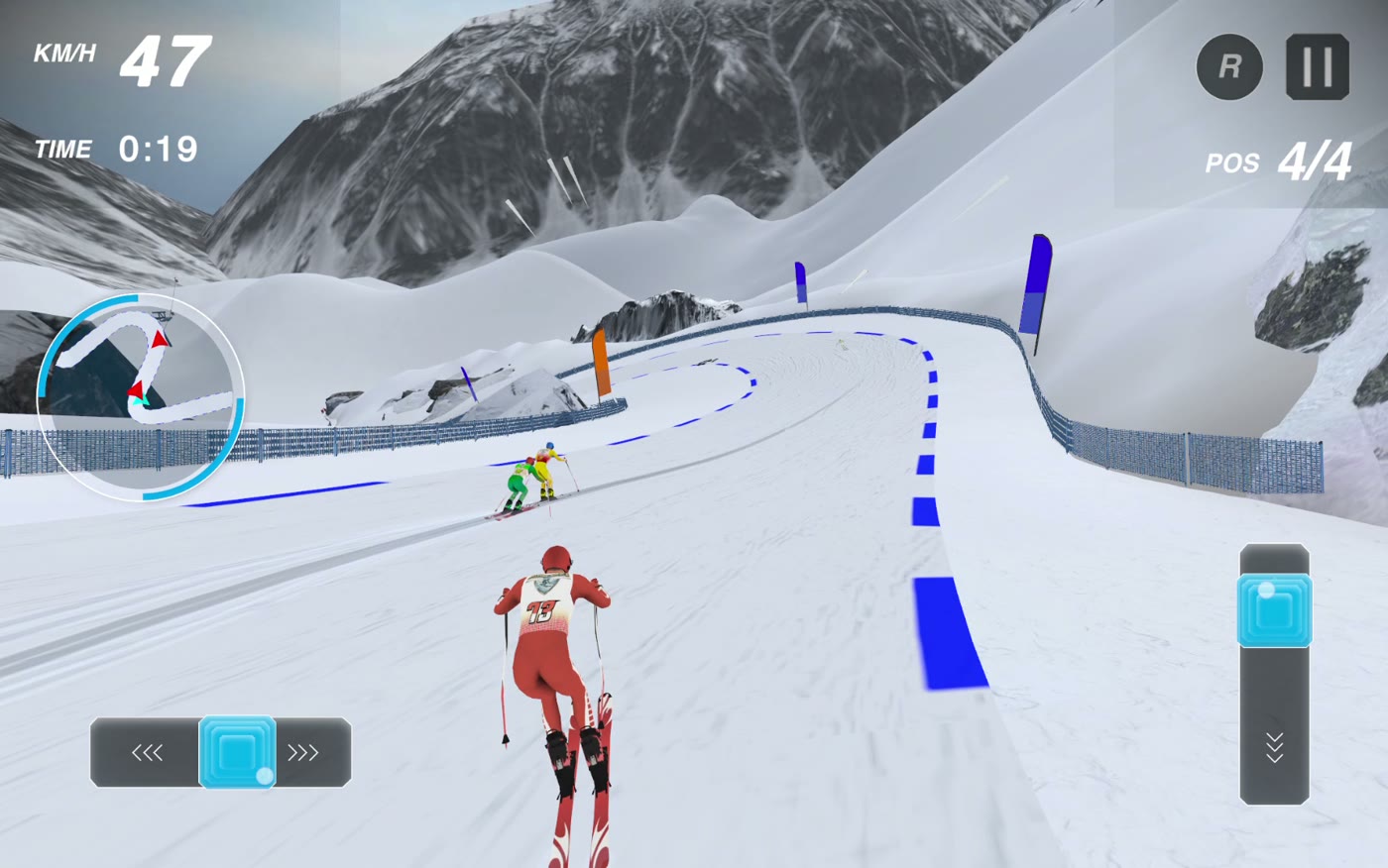
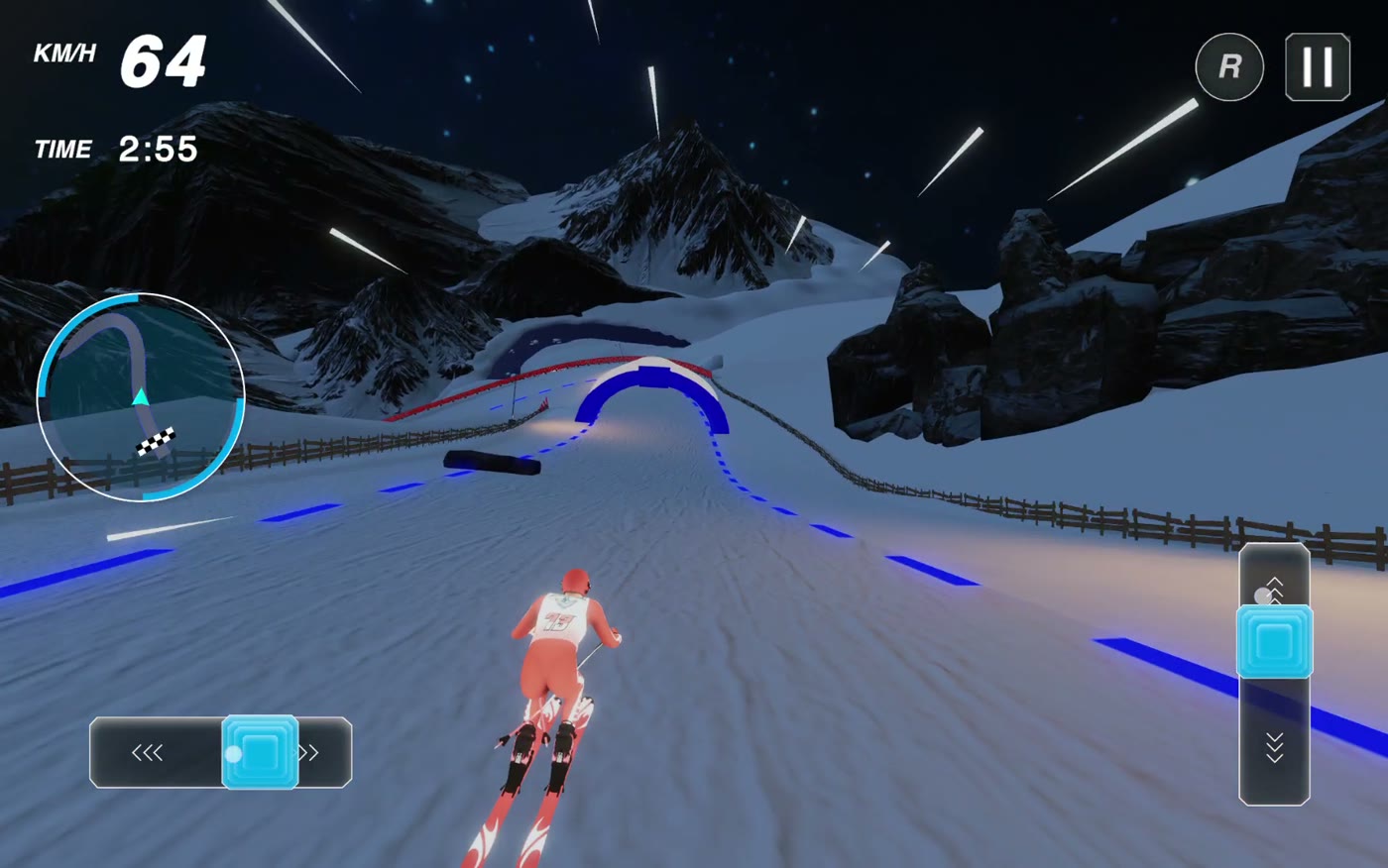
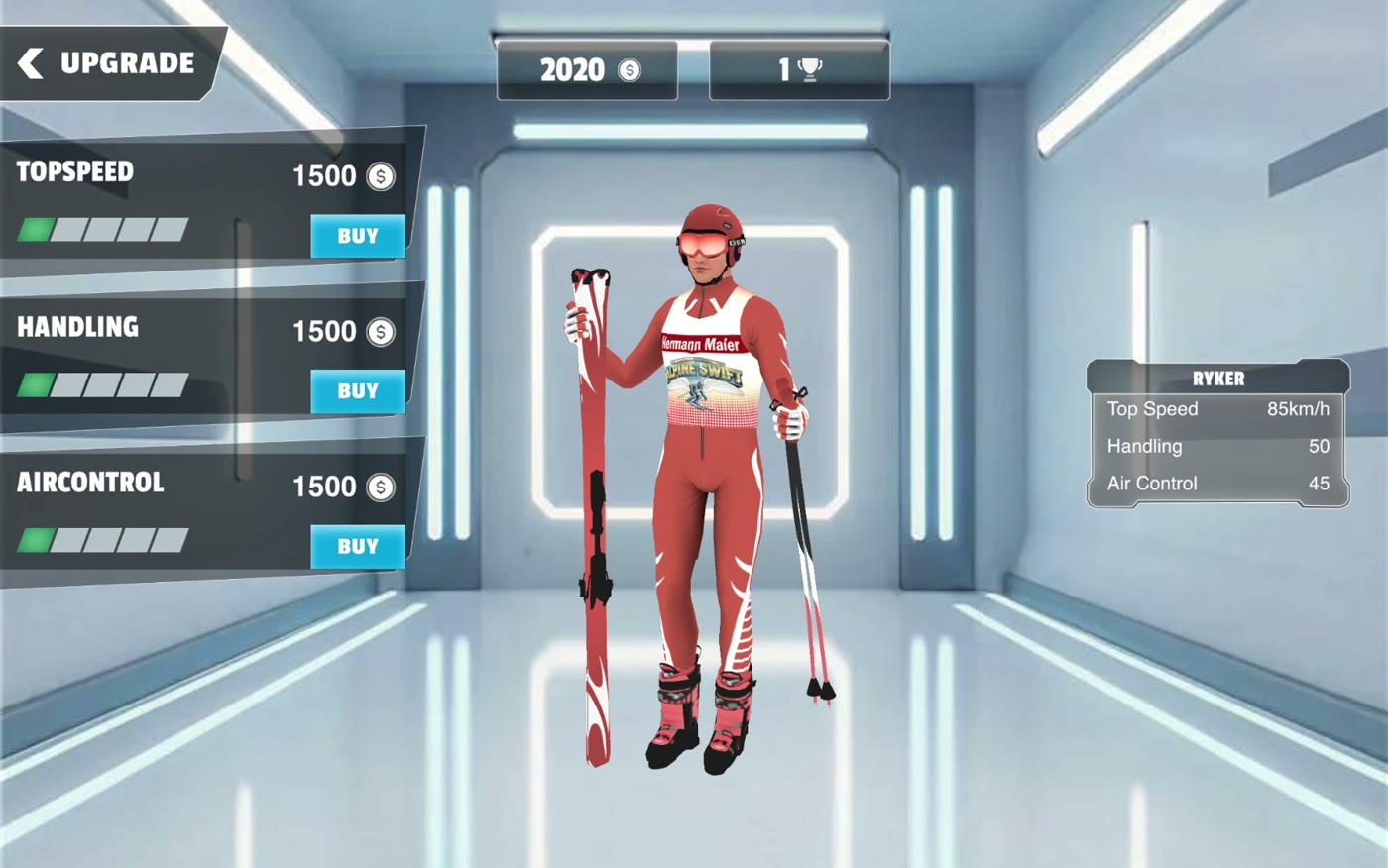
Hover or tap a tile to play a short silent preview. Captured from a development build.
Racing rewards throttle discipline. Skiing rewards weight and line, which maps naturally onto a large analog wheel with real return force. Running both titles from the same input layer demonstrates that a vehicle control surface can carry more than one kind of experience.
Both titles exist because in-car entertainment demos are usually a video player and a browser. Handing someone the wheel and letting them race with it makes the point about a software defined cockpit far faster than a slide does. We can adapt either title to a specific display layout, control mapping, or brand treatment for a programme or an auto show build.
Turn the wheel and the car on screen turns. Press the accelerator and it pulls away. There is nothing to explain, which is exactly why it works on a show floor.
Spark Pursuit and AlpineSwift, built by LinkLabs.How these titles reach a vehicle, depending on how much of the stack a programme wants to own.
| Option | What it involves | Best when |
|---|---|---|
| Show and bench demo | A packaged build running on a rig or target display, driven by a wheel and pedal set or the vehicle controls. | Auto shows, customer clinics, and internal concept reviews. |
| Cockpit integration | Installed as an application on the vehicle platform, reading real control input and gated on vehicle state. | A programme evaluating in-car entertainment as a shipped feature. |
| Branded variant | Environment, vehicle model, livery, and interface treatment adapted to a brand or a launch campaign. | Launch activity where the game should look like the marque, not like a generic title. |
| Control layer only | The input mapping work applied to a title or application a programme already owns. | An existing entertainment partner needs vehicle controls wired in correctly. |
We can bring a rig, or supply a build for your own bench or target hardware. Both titles are development builds under active work, and either can be adapted to a specific display and control configuration.